Ash
Fowlers Live
September 8th 2026
It’s 30 years since Ash released 1977, their wistful, heartfelt paean to teenage longing, kung fu and Star Wars, and as is the way these days, we’re getting a rendition of the record in full, plus a few extras from their extensive catalogue and latest album.
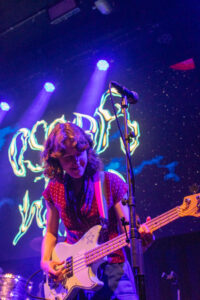
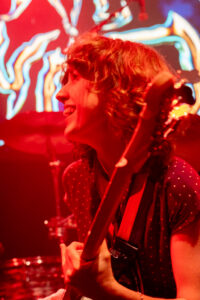
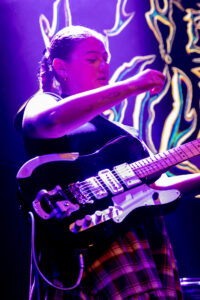
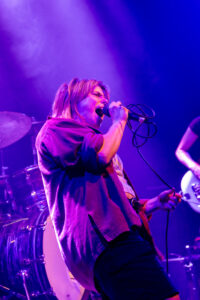
The Fowlers band room is half full for Oscar The Wild, who have been given a good 45cm of stage space on which to fit the four members, with drummer Ariya almost in the wings.
“I’ve listened to Ash since I was a little kid,” she tells the room. “My whole family is in the audience!”
The band members are a few years younger than Ash’s debut record, but they take full advantage of the Nirvana-via-Pixies ‘Loud-Quiet-Loud’ dynamic for the majority of the tracks.
An attempted call and response of the song’s title in She’ll Be Right is probably a bit early in the evening (or too complicated) for the crowd, and the first half of the set struggles to launch, but with Sunrise and Big Think at the tail end, it comes together with more than a hint of Violent Soho and an inclination of where they could take it.
Cue screaming Tie Fighter sample
The meteoric rise of Northern Ireland’s Ash as ‘Genuine Real Teenagers’ (their earlier, more terrible band name) is one of those mythical ‘90s rock stories of kids catapulting to fame while still at school, much like Silverchair and Hanson around the same time.
Signing in ‘94, a slew of top 20 singles preceded the release of 1977 in 1996. They’d already played Glastonbury 2 days after graduating high school and toured with icons of both Britpop and Grunge prior (neither scene they actively engaged with, but the timing and crossover appeal definitely helped).
It’s that collection of influences that made this band so well received in Australia, influencing a ton of locals like Jebediah and Pollyanna with the ‘Loud-Melodic-Plaintive-Loud’ dynamic that was all over Triple J at the time.
All of this explains why the room at Fowlers is near full of 50-year-old teenagers.
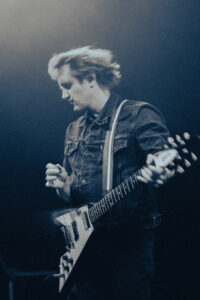
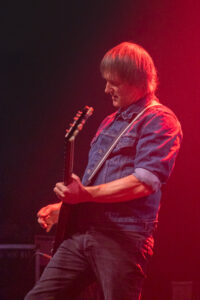
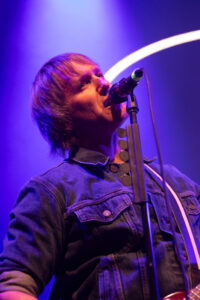
The aforementioned Star Wars sample that opens the record and introduces Lose Control is all part of the theme: 1977 is the year the film opened, and Tim Wheeler (Guitar/Vocal) and Mark Hamilton (Bass/Absolutely No Vocals) were born.
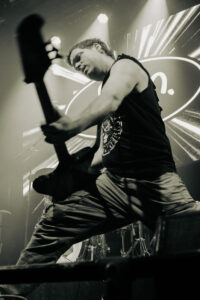
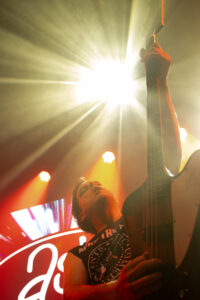
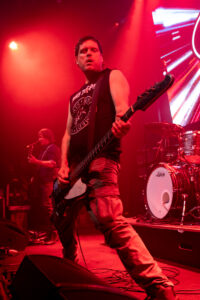
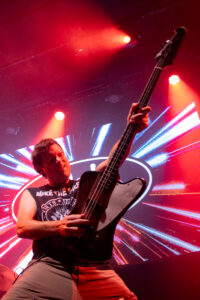
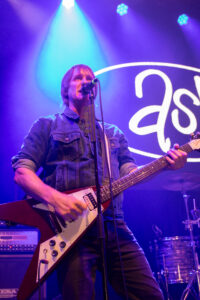
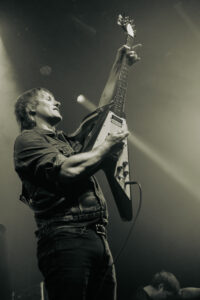
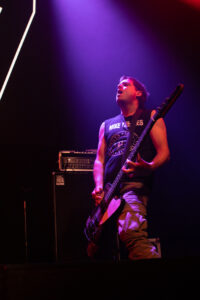
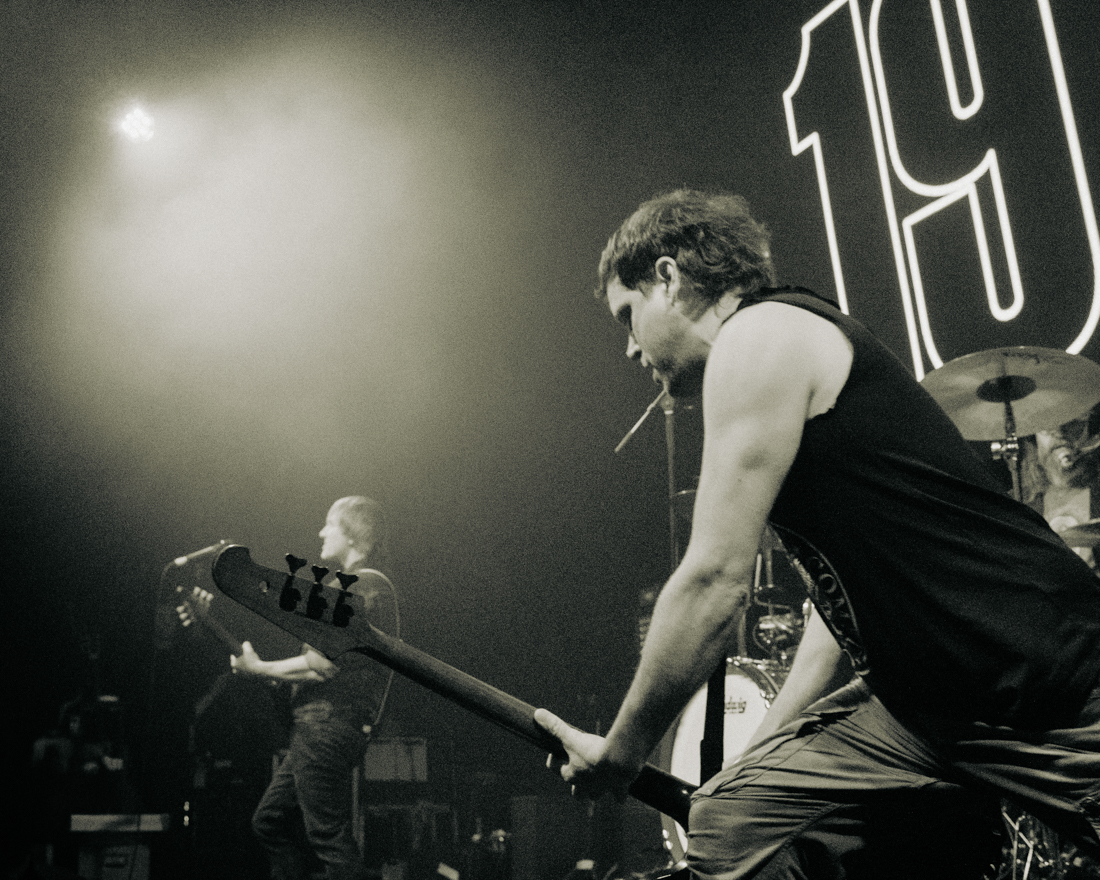
The underpinning tone is Hamilton’s three-stringed Gibson Thunderbird through an Ampeg stack. It’s the sound of ‘90s ‘alternative’ rock, the pick clattering on strings as the bass follows the root notes without much deviation. Simple, meat-and-(Irish)-potatoes musical honesty at work.
It’s a rapid-fire opener which rips open the set for the big numbers, numbers like Goldfinger. This is what the room has come for. It’s the classic boy meets girl, girl leaves for a while, boy thinks of girl’s brother starting school today, boy gets some records and wine and waits for girl to return kind of story. You know, universal themes.
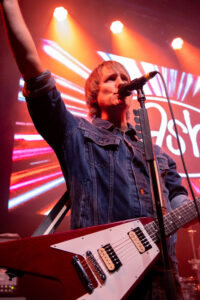
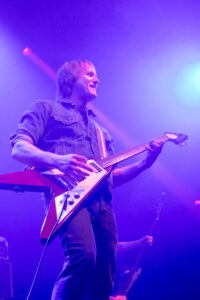
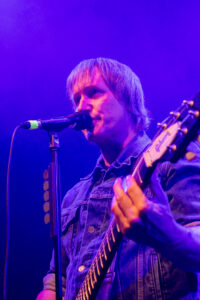
Wheeler wrote it when he was 16, and while that kind of teenage poetry is usually packed into shoeboxes and hidden safely away, his was in the top 10 on the UK charts. Considering these tracks gave him and his mates a career that seems to be kicking along fine 30 years later, he doesn’t seem to mind.
Girl From Mars follows with as much enthusiasm from the crowd, nostalgia flowing on full pressure now, no moshing but the happy bobbing and mouthed singalongs that signify when Gen X-ers are back in the zone.
There aren’t too many albums that fit the ‘no skips’ category, and 1977 has a couple that may have made better B-sides, I’d Give You Anything being one of those that makes these full album playthroughs hit and miss. Gone The Dream could have fit nicely on Hourly Daily, an up-and-down melodic piece that does show the gap between Wheeler’s vocal ambitions and abilities, something that defines Ash’s style.
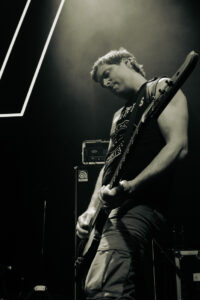
Kung Fu, complete with the movie sample, hits like it did on release, a proper rip through that is introduced as the fastest song they ever wrote, and one that was meant to be a B-side until their manager picked it as a single. It’s easy to see these are the tracks that Hamilton revels in on bass. He’s had 30+ years to practise his shapes, and while there is no microphone on his side of the stage, there’s plenty of action.
“Did anyone see us on the 1977 tour? I think we played with Garbage.” Many, most definitely, did.
The crowd sings back the first “Oh Yeah” in Oh Yeah loud enough to drown the band for a moment; apparently, this one is easier to work with. We’re not deviating too far from the ‘young love and its myriad complications’ themes that made the band, and this one is as well loved as Goldfinger (albeit it coming in at No. 6 vs No. 5 on the UK charts). The crowd’s sing-along ability is further tested with an attempt at the refrain, but nobody is sure if we’re singing ‘Start of the summer’ or ‘Start of forever’, like when you try to sing happy birthday and nobody is sure whether it’s ‘Robert’ or ‘Bob’.
There’s some solid power pop in Let It Flow with that crossover mod thing that worked so well for bands like Sloan and Even, a chunky opener carrying the melodic verse and chorus.
It’s been said that rock & roll freezes a person at the age they became famous, and these guys are definitely locked into the vibe of their late teens. It’s hard to tell if they’ve retained that youthful naïveté or know how to turn it on to deliver these. Playing these songs ‘professionally’ after three decades of practise would probably rob them of their value, and seeing as Wheeler has the period-correct haircut to seal the deal, it all comes across with an endearing honesty.
Innocent Smile is a bit of a filler, but the middle 8 wakes it up, and the band put their all into making it work. The somewhat tacked-on ender lets them push it further, and the crowd appreciates the effort.
Angel Interceptor gets its whirling synth intro. It’s ‘third single from hit record’ territory, enough of the rhythm of Goldfinger but sounds like a real effort to write an intentional hit. Has the ‘ooh aahs’, palm-mute chugs and the cut/stop changes that he uses to effect throughout the album, and you can hear much of the subsequent Nu-Clear Sounds album coming down the line.
Lost In You is dedicated to Wheeler’s son George (the boy who wants to be a robot velociraptor when he grows up). Another driven by the ‘big-little-melodic’ formula, which again pushes the vocal ambitions into more uncertain territory.
Dark Side/Light Side is as heavy as they get on 1977, a fully rendered teenage summertime breakdown closing out the album.
The encore is a chance to fast-forward their career by 29 years. Ash have been utterly prolific since their debut; it’s a 10-album catalogue with 300+ individual tracks, a solid chunk released as 26 singles coming out fortnightly between 2009 and 2010. So choosing 8 to play after the main album run must have been a nightmare.
The indulgently pompous (but well executed) Zarathustra, otherwise known as ‘The Space Odyssey’ song, opens this next part of the set, drawn from their last album, 2025’s Ad Astra. The backdrop has changed to the current logo, an element that has changed for each release.
Fun People launches with Graham Coxon’s (Blur) sample, illustrating the diversity of style here. It’s comic punk pop of the ‘80s variety.
“Stuck here with fun people like you.”
With the logos changing for each album era, the skater version is present for the Ewan McGregor-soundtracking Life Less Ordinary, one of the bigger pieces post-1977 and garnering much love from the crowd. Would have been a nice time to bring on Charlotte Hatherley, Ash’s second guitarist from 1997 to 2006, but alas, not to be.
Shining Light was Ash’s redemption after the commercial dip of their aforementioned second record Nu-Clear Sounds. It was a pretty major hit in the day, a melange of Reef with a little Kula Shaker in the middle 8, showing again Wheeler’s love of self-punishment in the key lift of the final chorus. There’s a will, even when not so sure of the way.
Orpheus comes on heavy, replete with backdrop flames and phoenix-styled logo, but the Muse theatrics roll into heavy pop and Stereophonic bubblegum “Sunshine in the morning” chorus.
Apparently, Jump In The Line is for all the calypso fans. I don’t know how many made it out tonight, and it’s an uncomfortable diversion. Apparently, it’s a cover of a ‘60s Harry Belafonte track, but we need context and get guitar histrionics instead.
The band sign off the evening with “Thank you for 30 years of support from Adelaide”, like the pilot thanking us for flying. Cabin crew, please take your seats.
Somehow, the volume is ratcheted higher for closer Burn Baby Burn. The logo is spewing blue flames now. It’s a solid way to exit, a combined conglomeration of each era of Ash and fitting summary of the experience.
We’re ushered out to the strains of the Dirty Dancing theme. It takes a moment to realise that it shares the same chorus as the last song we heard from Ash. “I had the time of my life”? Not sure of that, but it was a definite showing of how that first burst of success has kept them burning.