 0
0
 0
0

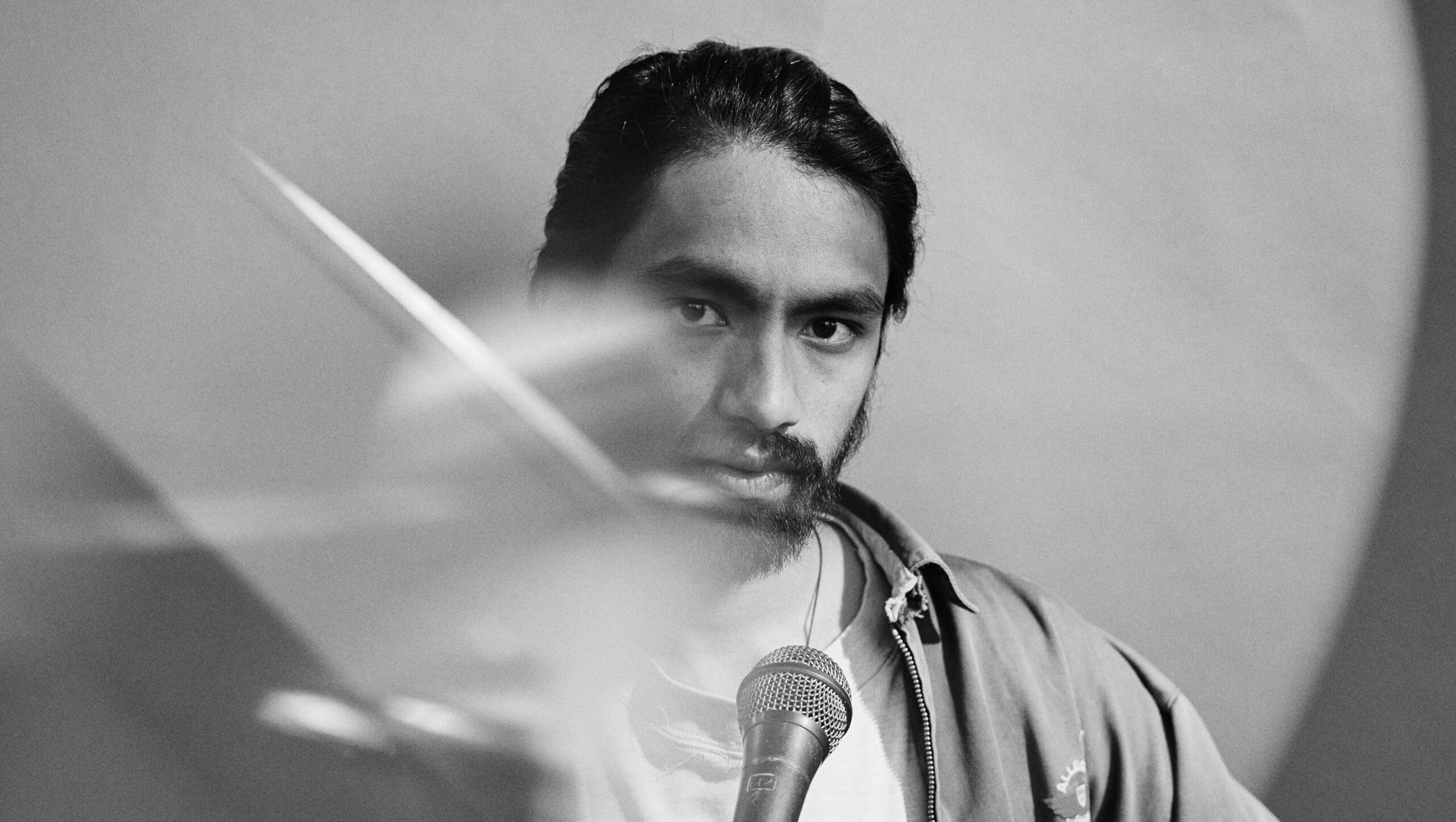
photo credit: Vikk Shayen
Hope for artists in the age of AI
We underestimate AI – but not as much as we underestimate humans.
For the most part, I believe the hype. AI is the most important technological advancement in history. As a human, I’m deeply concerned. As an artist, less so.
After launching my poetry book ‘The Silent World That Won’t Stop Talking’ in 2021, I quit my copywriting job and took the plunge into doing creativity, music and the Flash Poetry project full-time. Soon after, ChatGPT was born and I watched as the souped up chatbot turned the copywriting industry on its head. Almost overnight, people were given an ultimatum: get across AI or get a new job.
For the most part people obeyed, stoically committing themselves to learning the new technology that promised to 10x their output. I had gotten out just in time, it seemed, until the headlines started saying that artists & musicians were next. Four years later and a lot has changed. ChatGPT is still here, but so are our artists and musicians – and I do believe that’s the way it’s going to stay.
A few months ago a friend of mine informed me, rather casually, that with the right prompting the new ChatGPT model could write me a Flash Poetry calibre song. Now, I’m a poet and a writer before a musician, and my lyrics are what define my music and trademark style as an artist. I agonise over every line, experimenting endlessly with images & metaphors to craft lyrical and philosophical epics. I weave elaborate stories and collide the hyper-modern with the ancient in an attempt to excavate something meaningful & luminous.
This is how I approach my poetry and it’s how I approached my Kickstarter funded debut album ‘Reality, Now’, which I recently put out. People resonate with what I do because of the depth, nuance and message behind every song.
My friend didn’t buy it. He asked me to send him the lyrics from my last few songs and a PDF of my poetry book. Warily, I handed them over, far more eager to see if he was right than to protect my work from the tendrils of the AI database.
A few days later, he sent me the lyrics to a song. Three verses and a chorus. What he and ChatGPT had written was… impressive—for a chatbot. There were some interesting ideas, some amusing phrases, but ultimately, not a single line that I would ever actually use in one of my songs. It bore some resemblance to my style, but felt uninspired, dismally unrefined and, on the whole, artless.
At the heart of a good lyric, I believe, is real human experience. AI may have access to everything we have ever written but it has no idea what it is to experience any of it. And in the context of art, this is important. A well written line can carry a lifetime’s worth of longing, heartbreak and ecstasy—layers of visceral meaning and emotional nuance that AI is nowhere near reproducing.
Poetry deals with the ineffable, with paradox, with what lies beneath the hood. It is the product of a genuine lived experience – a heartfelt account of what it is to exist in a human body.
AI is good at doing many things: drafting emails, editing photos, summarising reports. If the task is relatively straight forward, it is a tool that saves a lot of time, often only requiring a person to come in at the end and add that last ten percent of polishing (or unpolishing) and a ‘human touch’.
For most industries, this is a game changer – but what makes good art good art is precisely that last ten percent. It’s the searing originality, the wrenching vulnerability, the imperfections of something created not by fixating on an outcome but by surrendering to the slow, messy and mysterious process of the creative act.
AI skips these steps and rushes to the final product and, in many ways, is an extension of what is wrong with the world. We have been raging away for so long on the assumption that more is better and that product is more important than process – and it has led us to a point in history where it’s beginning to look like we’ve been making all this ‘progress’ in the wrong direction.
But there is hope. As AI smoothes our edges and turns art into content and content into culture, as it turns the internet and the world into a sea of predictable mediocrity and ‘good enough’, it will become easier than ever to stand out. As an artist, sinking into your most unhinged, raw and imperfect human self is your best bet.
AI runs on data, and data is not life. Art is life. AI optimises for quantity, not quality, for the median, not the magnificent. The copywriter trembles. The poet keeps writing.
But it must be said, a revolution is occurring, and as with any revolution, there will be casualties. There will be artists of all kinds whose work will be forever changed or replaced by AI. But art that is truly unique, meaningful and unapologetically human will continue to flourish.
We don’t need more product, we need more meaning and messy, beautiful human expression to return us to the essence of what it means to be a living, breathing, aching human being. The marketplace will adapt and reward those creating the kind of art that AI cannot – and that’s not necessarily a bad thing.
Nico Lim (Flash Poetry)
Flash Poetry’s debut album ‘Reality, Now’ is out now.


