After a triumphant inaugural season, Spiegel Haus Melbourne returns to the CBD from 23 September, unveiling its first programming for season two with highlights including Briefs and La Ronde
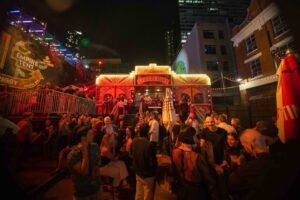
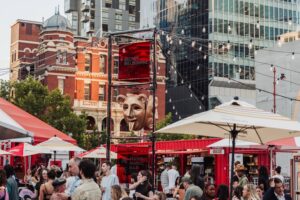
Spiegel Haus Melbourne, housed in a Chinatown block with Spiegeltents, bars, food trucks, a theatre and stunning rooftop views of the city, cemented itself as Melbourne’s favourite new entertainment venue, attracting hundreds of thousands of visitors in its inaugural season from November 2025 to July 2026with a wild mix of cabaret, music, circus, family shows, burlesque and comedy.
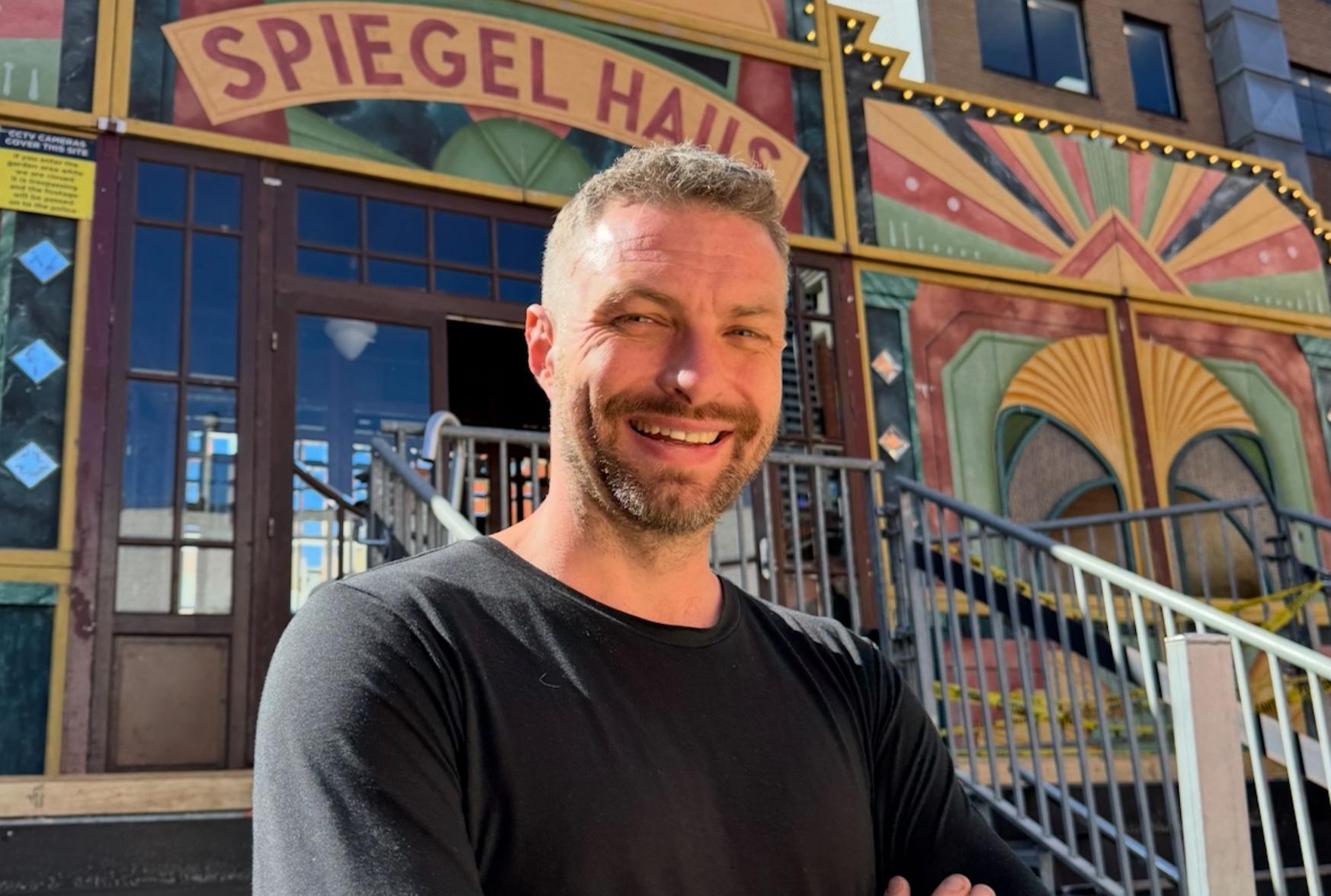
We caught up with Creative Director Chris Mitchell to talk about the new season.
With season two kicking off on 23 September with returning favorites like Briefs: The Works and Vaudeville Smash’d, how are you balancing the appetite for proven audience hits with the introduction of entirely new experiences?
It’s always about finding that balance. There are shows and artists our audiences have really connected with, and when something works exceptionally well there’s absolutely an appetite to bring it back. But we also want Spiegel Haus to be a place where people discover something they haven’t seen before.
Season Two gives us the opportunity to do both. We can welcome back productions that audiences already know and love while introducing completely new shows, artists and experiences. Ideally someone comes in because they know Briefs or Vaudeville Smash’d and then discovers another show they might never have otherwise encountered.
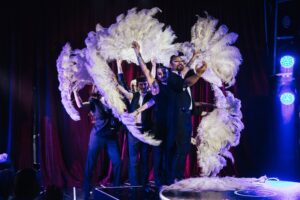
La Ronde arrives as a major headline act in October from the creators of Blanc de Blanc and Late Night Vice. What specific qualities did you look for when curating this global circus troupe to ensure it makes a distinct splash in its Melbourne debut?
After the response to Blanc de Blanc Encore, we knew there was a real appetite in Melbourne for world-class contemporary circus in our spiegeltent.
La Ronde has the scale, spectacle and international calibre we were looking for, but it also has its own identity. We didn’t want to simply replace Blanc with something that felt the same. La Ronde brings together incredible circus artists from around the world and has that combination of skill, humour, danger and intimacy that works so well in this setting.
The venue incorporates everything from spiegeltents and bars to food trucks and rooftop views in a single Chinatown block. How do you approach the spatial and environmental design of the precinct to enhance the distinct moods of disparate shows like filthy comedy and family matinees?
We’ve always thought of Spiegel Haus as more than somewhere you arrive five minutes before a show and leave immediately afterwards.
The precinct is part of the experience. You might come in for a family show during the afternoon and the atmosphere is completely different to arriving later for cabaret, circus or a late-night performance.
The spaces allow those different audiences to coexist without us having to force everything into one identity. The spiegeltent itself transforms depending on what’s happening inside it, while the bars, food, rooftop and surrounding spaces give people somewhere to make a night of it.
Blanc de Blanc was a fantastic show that ran an extended season in Melbourne. What was your proudest moment of the season?
Seeing Melbourne genuinely embrace the show was incredibly rewarding. Extending the season was obviously a huge milestone because it demonstrated that there was sustained demand rather than simply an initial burst of interest.
Seeing the tent full and watching audiences respond to the work night after night was probably the most satisfying part. Blanc helped establish what Spiegel Haus could be in Melbourne and demonstrated that audiences were willing to come into the CBD for this kind of experience.
October packs in an eclectic mix including the Australian Burlesque Festival, Melbourne International Jazz Festival events, and Melbourne Fringe. How do you manage the operational cadence and cross-pollination of such vastly different festival audiences under one roof?
It’s certainly busy, but that crossover is one of the things we love about the precinct.
You can have completely different audiences moving through Spiegel Haus over the course of a single day or week. Rather than seeing that as a challenge creatively, we see it as an opportunity.
Operationally it requires an enormous amount of coordination behind the scenes, but from an audience perspective we want it to feel effortless. You arrive and there is always something happening.
The venue has carved out a strong identity for family-friendly programming alongside its late-night cabaret and burlesque. How do you maintain a cohesive brand identity when catering to demographics as varied as school holiday families and late-night festivalgoers?
Our family programming is deliberately programmed around designated periods such as the school holidays, while the broader calendar includes cabaret, circus, comedy, music and late-night work for adult audiences.
The common thread is the quality of the experience. We want audiences to associate Spiegel Haus with great live entertainment and the feeling of discovering something special in the middle of Melbourne regardless of age.
Looking ahead to 2027, Spiegel Haus is slated to become a festival hub for both Midsumma and the Melbourne Comedy Festival. How early does programming for those major cultural events begin while a current season is actively running?
Much earlier than most audiences would probably imagine.
Programming and conversations for future festivals are happening while the current season is still very much alive. There are artists, producers, festivals, touring schedules, venue logistics and technical requirements that all have to line up.
It means we’re constantly operating across multiple timelines. We can be opening one production, marketing another and simultaneously having conversations about programming that’s still six months away.
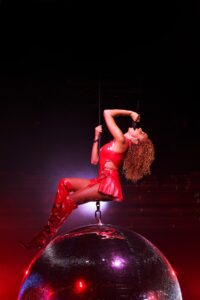
Vaudeville Smash’d blends a live concert with cabaret in a chaotic variety format. What makes this specific kind of high-energy music act essential to the overall pulse of the Spiegel Haus entertainment calendar?
A spiegeltent is built for this kind of show format. There’s something very different about experiencing live music when the performers are right there in front of you and the room feels like it’s part concert, part cabaret and part party.
Vaudeville Smash’d really embraces that. Having productions like this in the calendar keeps the precinct feeling alive and gives audiences something completely different from a traditional theatre experience.
From a creative direction standpoint, how do you work with visiting international and interstate productions — like the global phenomenon Briefs — to tailor their staging specifically to the intimate, historic atmosphere of the spiegeltent?
We work with producers and creative teams to understand what they need technically and creatively while allowing them to take advantage of what makes the tent special — particularly the proximity between performer and audience.
With companies that have toured extensively, they already understand how to adapt work to different spaces. Our job is to give them the infrastructure and support to make the version audiences see at Spiegel Haus feel completely at home here.
With plenty of programming still left to be announced for season two, what are the primary creative gaps or artistic disciplines you are still hoping to introduce to the Melbourne CBD audience in the coming months?
Circus and cabaret are obviously a huge part of the DNA of a spiegeltent, but we’re interested in continuing to expand the music, comedy, theatre and festival programming around that.
The exciting part of having multiple spaces within the precinct is there is room for major headline productions alongside smaller, stranger or more experimental ideas.
What overarching economic, logistical, or cultural challenges do you think the live entertainment industry is facing right now, and what specific strategies do you use at Spiegel Haus to overcome them?
The cost of presenting live work has increased enormously. Between artists, crew, freight, accommodation, production and marketing, almost every part of putting a show on has become more expensive while audiences are dealing with their own cost of living pressures.
The industry has to work incredibly hard to demonstrate the value of going out and experiencing something live.
For us, part of the response is creating a space where people can meet, eat, drink, see a show and spend time in one precinct. Collaboration is also increasingly important. Working with festivals, producers and artists allows us to build audiences together rather than everybody operating independently.
What do you love the most about the Australian entertainment scene compared to other markets you’ve worked in or observed?
Melbourne in particular has an extraordinary live-performance culture that I’ve watched evolve over my 20+ years working in events. What I love about Australian audiences is their willingness to embrace work that doesn’t necessarily fit neatly into one category. Audiences are curious, and festivals play a huge role in encouraging people to take a chance on something unfamiliar.
How different are Australian audiences compared to the rest of the world, and do international or touring shows generally have to modify their content or delivery to suit local tastes?
Every audience has its own personality, and Australian audiences certainly aren’t passive. They respond very quickly when something connects with them, particularly with comedy and work that involves audience interaction. International productions sometimes discover that particular references or moments land differently here, but I don’t think the answer is to completely reshape a successful show for Australia.
The best touring productions retain what made the work successful in the first place while remaining responsive to the room. No two audiences are exactly the same, so the relationship between the performers and the room is constantly changing.
With plenty more programming yet to be announced, Spiegel Haus Melbourne will once again be a festival hub for both Midsumma and Melbourne Comedy Festival in 2027, and the number one spot for performance, music and live entertainment in the CBD.
Tickets on sale now at spiegelhausmelb.com
Spiegel Haus Melbourne